Process System Specialties
Surface Finishing Systems
Surface finishing is where material intent becomes functional reality. Corrosion resistance, wear performance, electrical behavior, adhesion, and long-term durability are often determined at the surface, and those outcomes quietly enable everything from automotive and aerospace hardware to electronics and industrial equipment.
In most manufacturing environments, finishing sits downstream of fabrication but upstream of field performance. When finishing systems are designed and operated well, they run quietly and predictably. When they are not, they surface as scrap, rework, unstable throughput, and corrective actions that consume engineering and operations time.
What makes finishing systems difficult is rarely the underlying science alone. The challenge is execution. These systems operate at the intersection of chemistry, power, material handling, environmental control, and human interaction, where small deviations compound quickly. Plating, anodizing, e-coating, and powder coating are often grouped together, but they are fundamentally different process families, each with its own architectures, controls, and risk profile.
Plating Systems
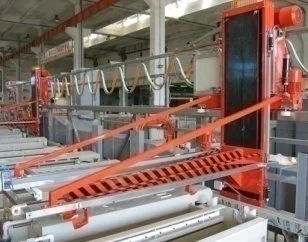
Electroplating spans a wide range of processes, and plating systems are often mischaracterized as simple immersion processes. In practice, electroplating depends on tightly coordinated industrial systems across both development and production environments, and performance is governed by how transport, electrical power delivery, pretreatment and rinsing, chemical control, filtration, automation, and environmental systems are architected and integrated into a single operating line. Well-designed systems remain stable as volume, part mix, and regulatory demands evolve, while poorly designed systems reveal their weaknesses under scale.
Electroplating Systems Explained
Anodizing Systems
Anodizing is widely used in aerospace, automotive, electronics, and architectural applications where surface integrity and repeatability matter. It forms a controlled oxide layer on aluminum, and results depend on tightly integrated control of power delivery, bath chemistry, temperature, agitation, rinsing, sealing, and material handling. In aerospace and defense programs, demanding process control and audit disciplines make system architecture and operating rigor the primary drivers of consistent performance at scale.
Anodize Systems Explained
E-Coating Systems
E-coat, or electrophoretic deposition, is best described as a hybrid between plating and liquid painting. Unlike spray-applied liquid coating systems that are inherently limited by line-of-sight coverage, an e-coating system submerges parts in a water-based bath containing epoxy or acrylic resins and applies a controlled DC electrical field to drive uniform deposition across complex geometry, including internal cavities and recessed features. The coating is then stabilized through coordinated rinsing stages and locked in through a high-temperature curing oven, which is why e-coat systems are widely used as the foundation primer in high-volume automotive and industrial production where coverage consistency, corrosion protection, and material efficiency are critical.
E-Coating Systems Explained
Powder Coating Systems
Powder coating systems apply a fine, talc-like polymer powder that is electrostatically charged and attracted to the grounded part, then thermally cured to form a durable, uniform finish. These systems are widely used in automotive, industrial, consumer, and architectural manufacturing where appearance, corrosion protection, and coating consistency must be achieved at scale. In production, results are driven by how pretreatment, material handling and conveyorization, booth and airflow design, reclaim strategy, curing profiles, and controls are integrated into a stable operating system.
Powder Coating Systems Explained